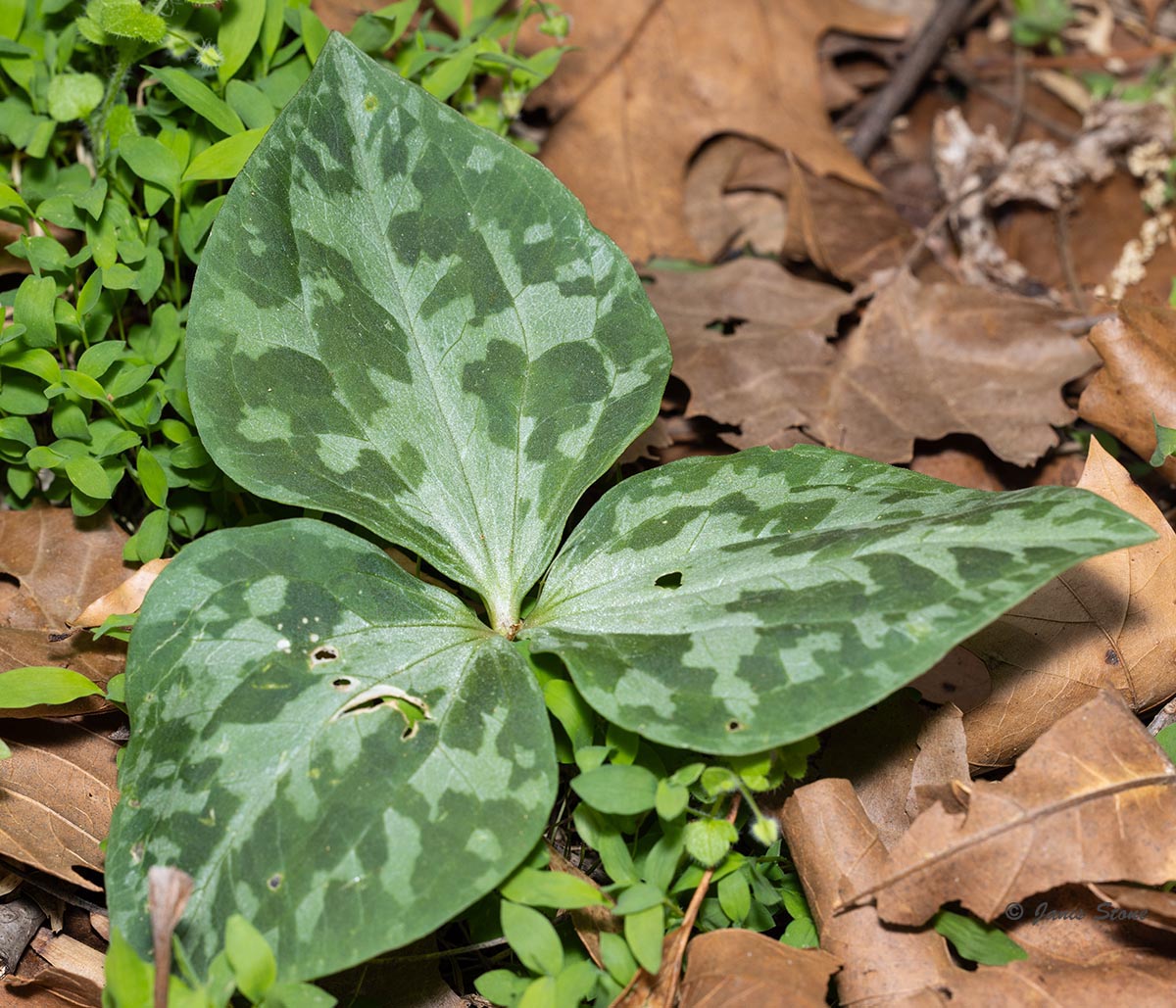
Trillium cuneatum
Little Sweet Betsy, Large Toadshade, Bloody Butcher
[ click on any image below to see larger version ]
Family:
Trilliaceae
(Trillium family)
Mid-Atlantic bloom time:
mid-March - April
Mid-Atlantic fruit ripe:
late May - June
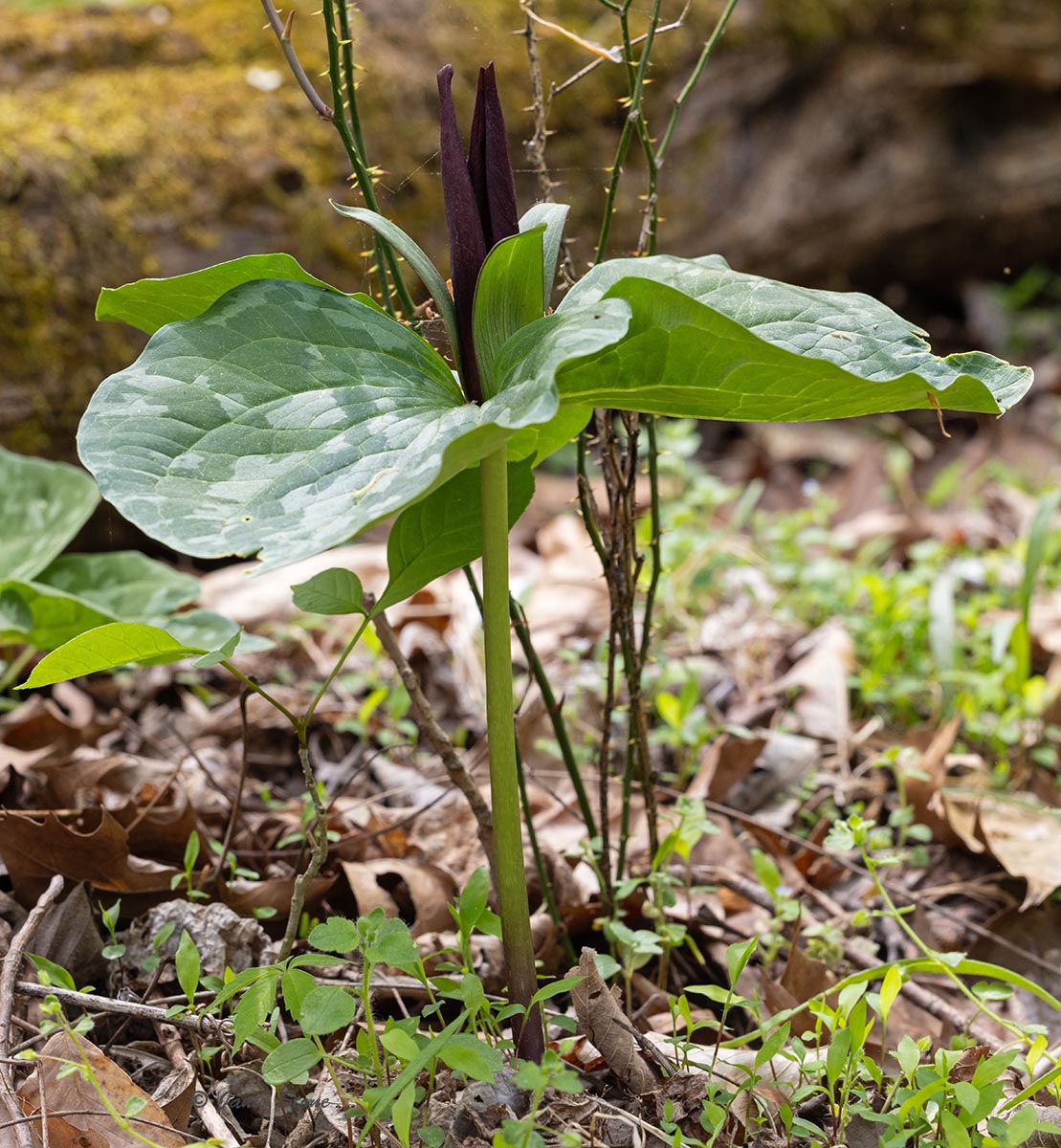
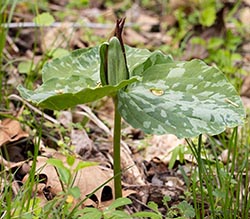
Little Sweet Betsy trilliums are fairly tall for and can range 30 cm or more in height, including petal structures that are 6-7 cm tall or more.
It is part of the Sessilia subgroup of trilliums that lack pedioles,
and bears a close resemblance to Sessile Trillium (Trillium-sessile).
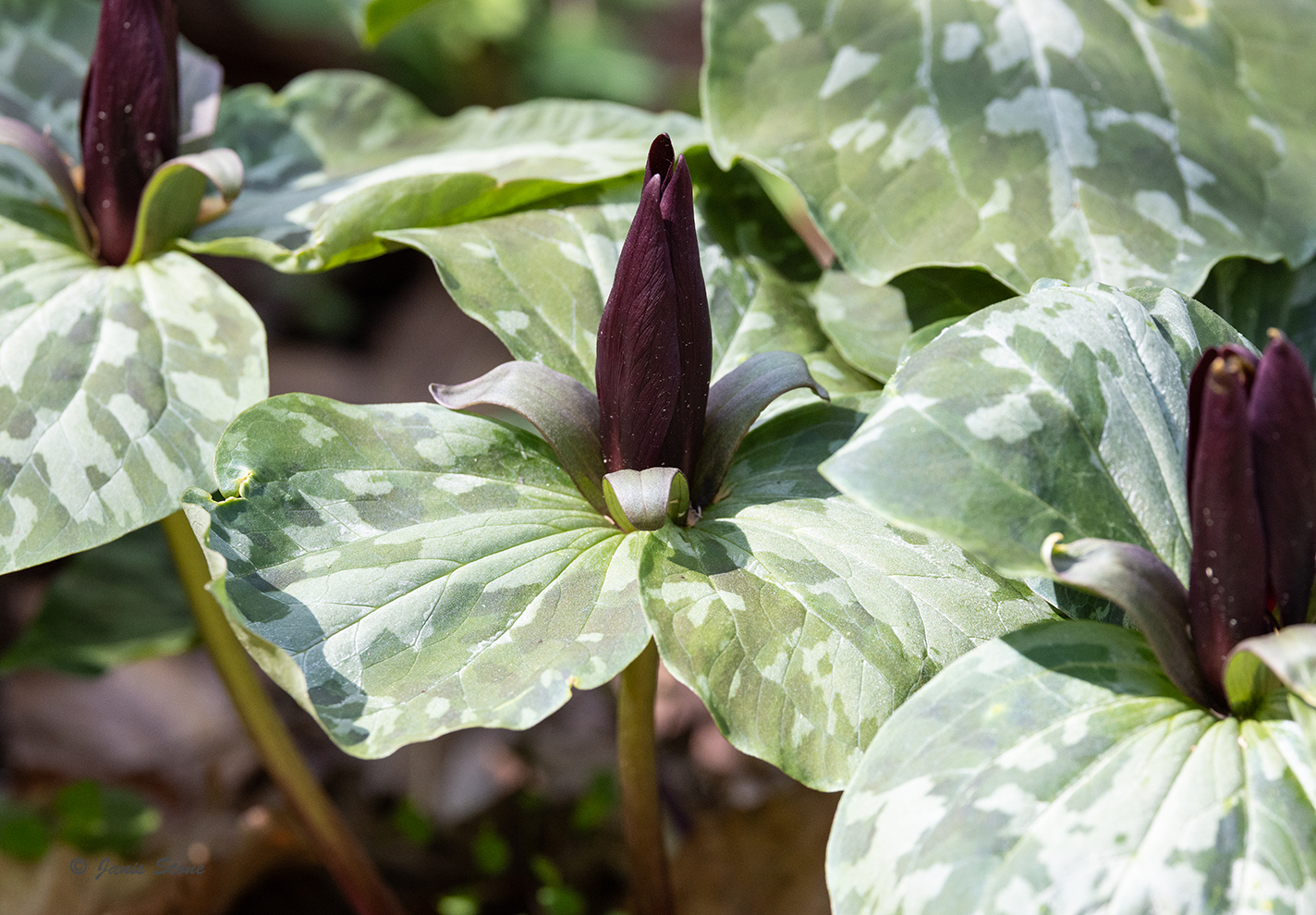
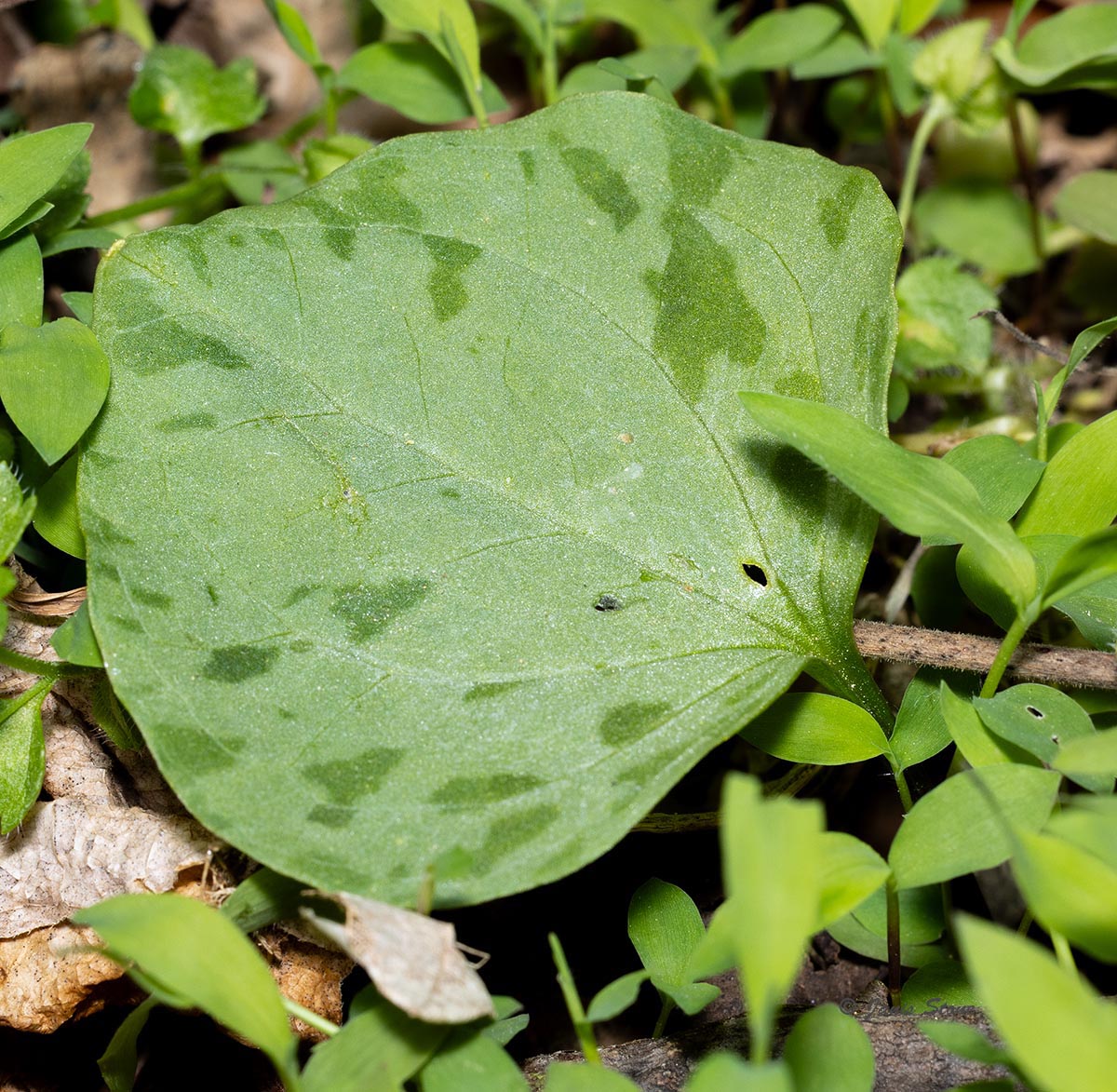
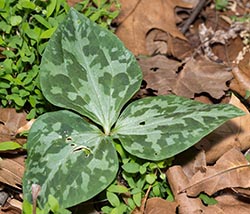
Little Sweet Betsy has distinctly mottled leaves, most of which have pointed tips
(rather than the more rounded leaf tips Sessile Trillium usually has).
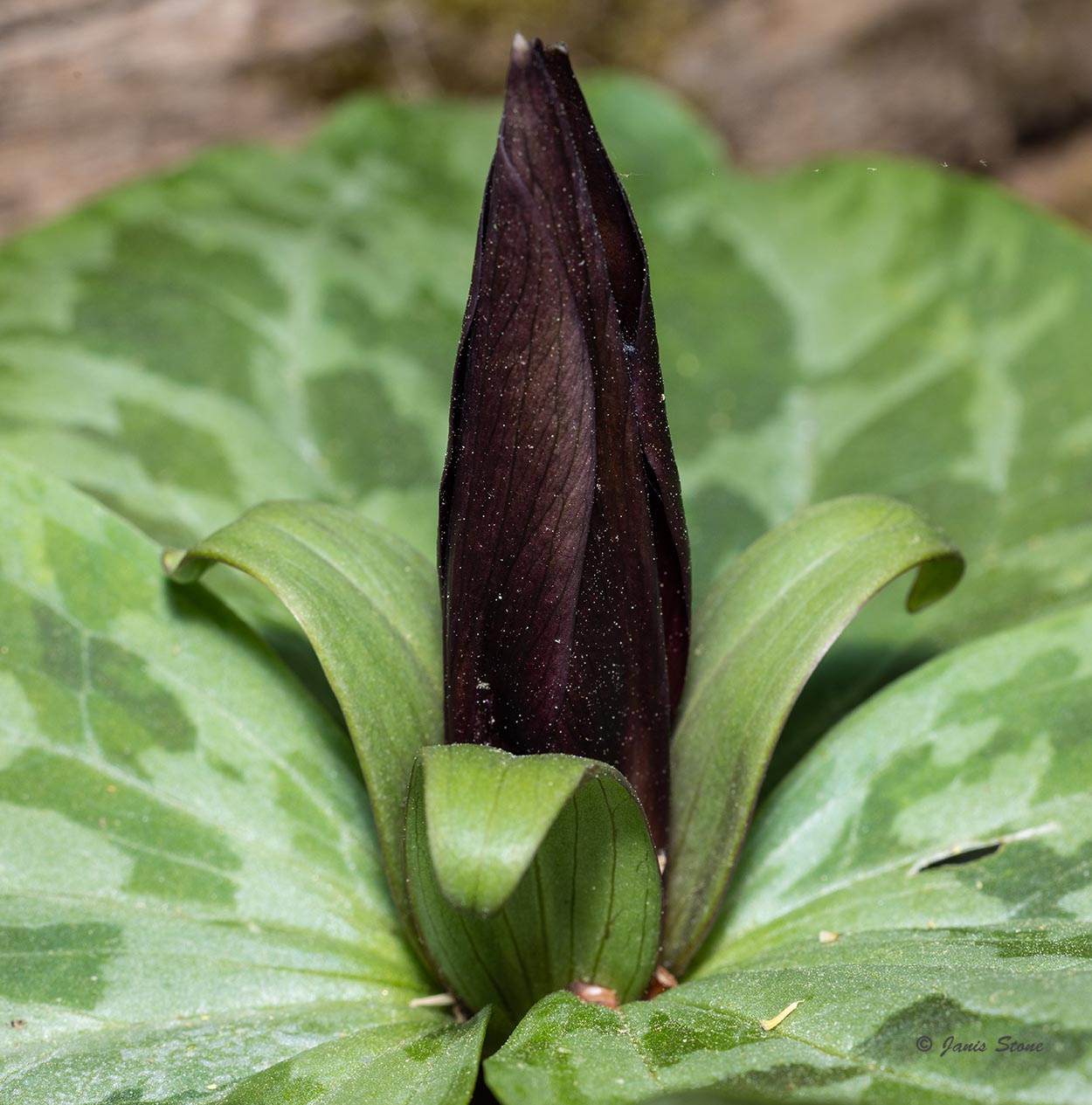
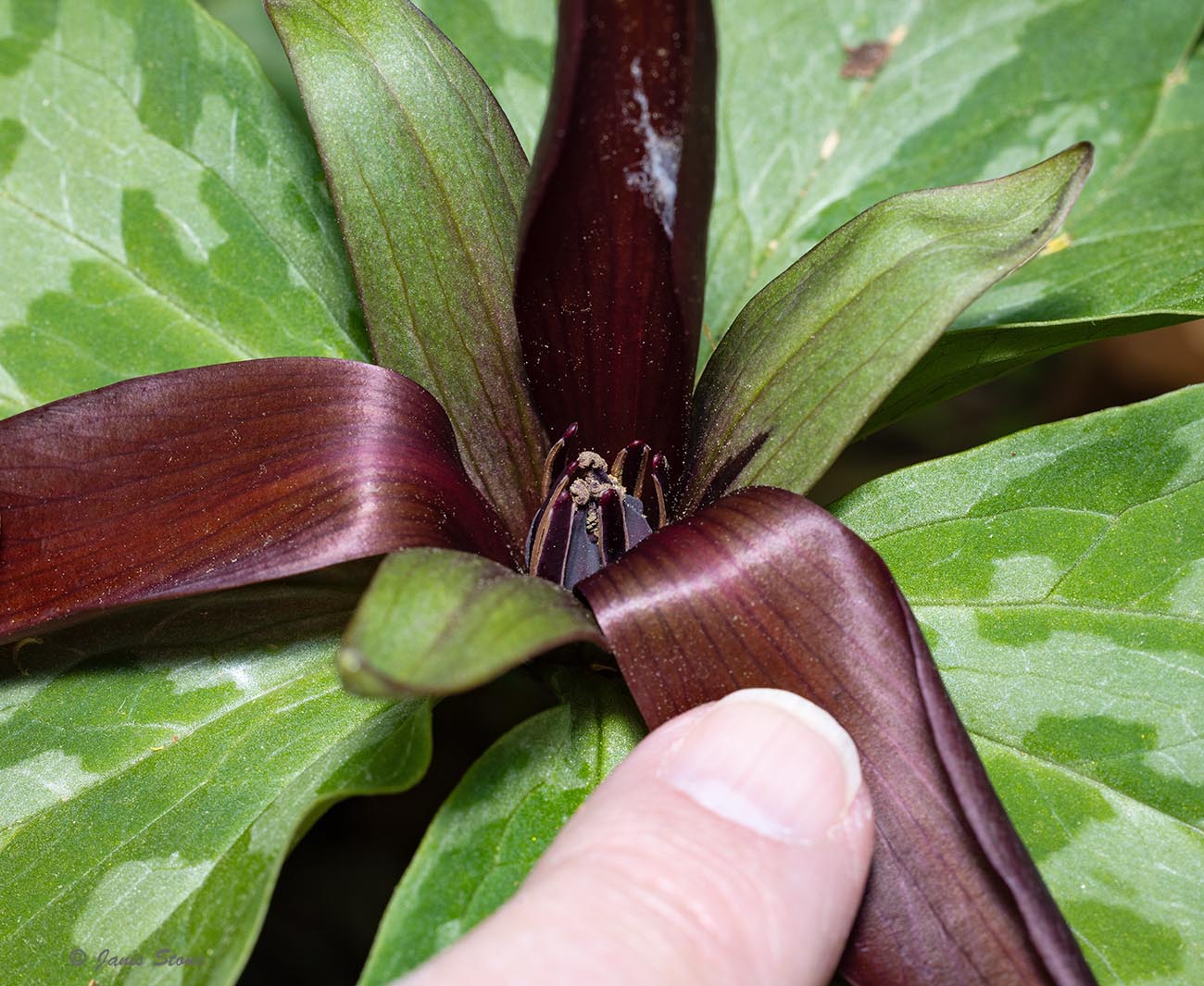
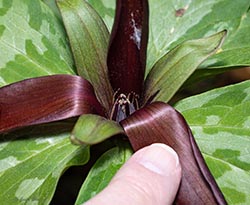
Its upright, dark burgundy petals are tightly clasped to a sharp point,
and it gives off a faint odor I describe as "citrus fruit that has gone overripe and starting to rot".
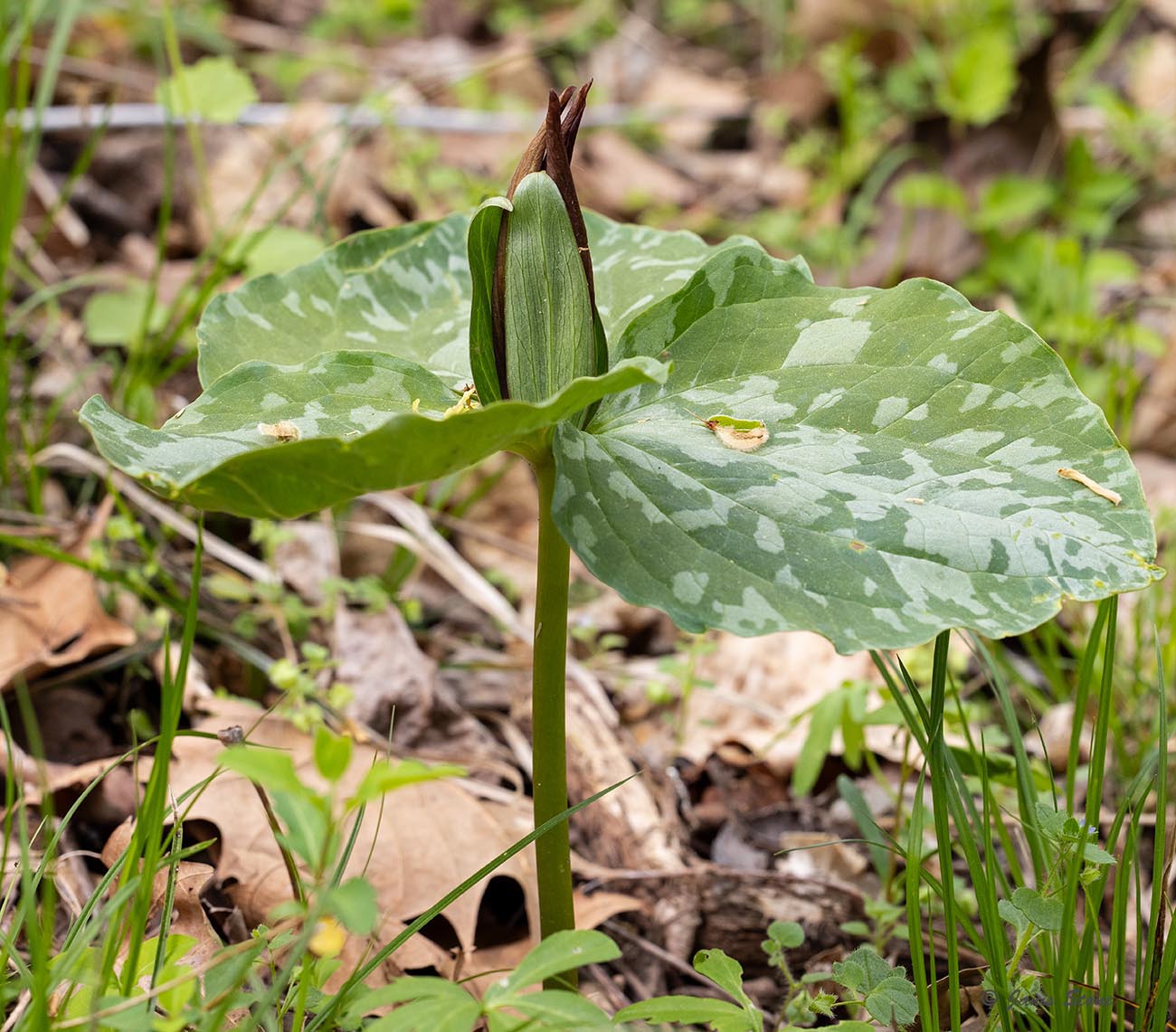
Its seeds often require two years to sprout a single leaf, forming all three leaves in subsequent years, with flowering after 5 to 7 years.
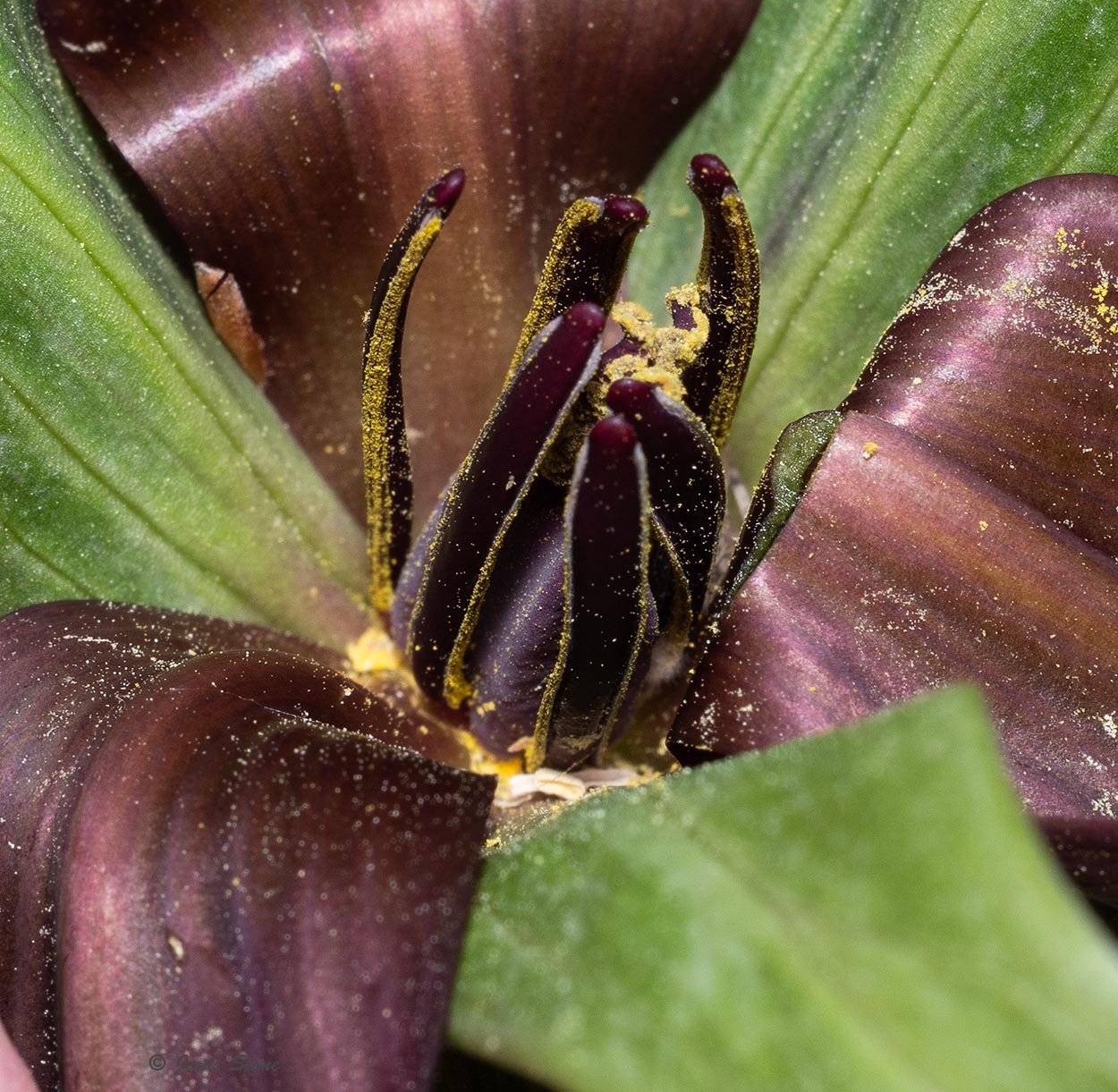
Little Sweet Betsy anthers (indeed, the whole reproductive structures) are about 1/4 the length of the petals (always less than half),
unlike Sessile Trillium's anthers which are about 1/2 or more the length of the petals.
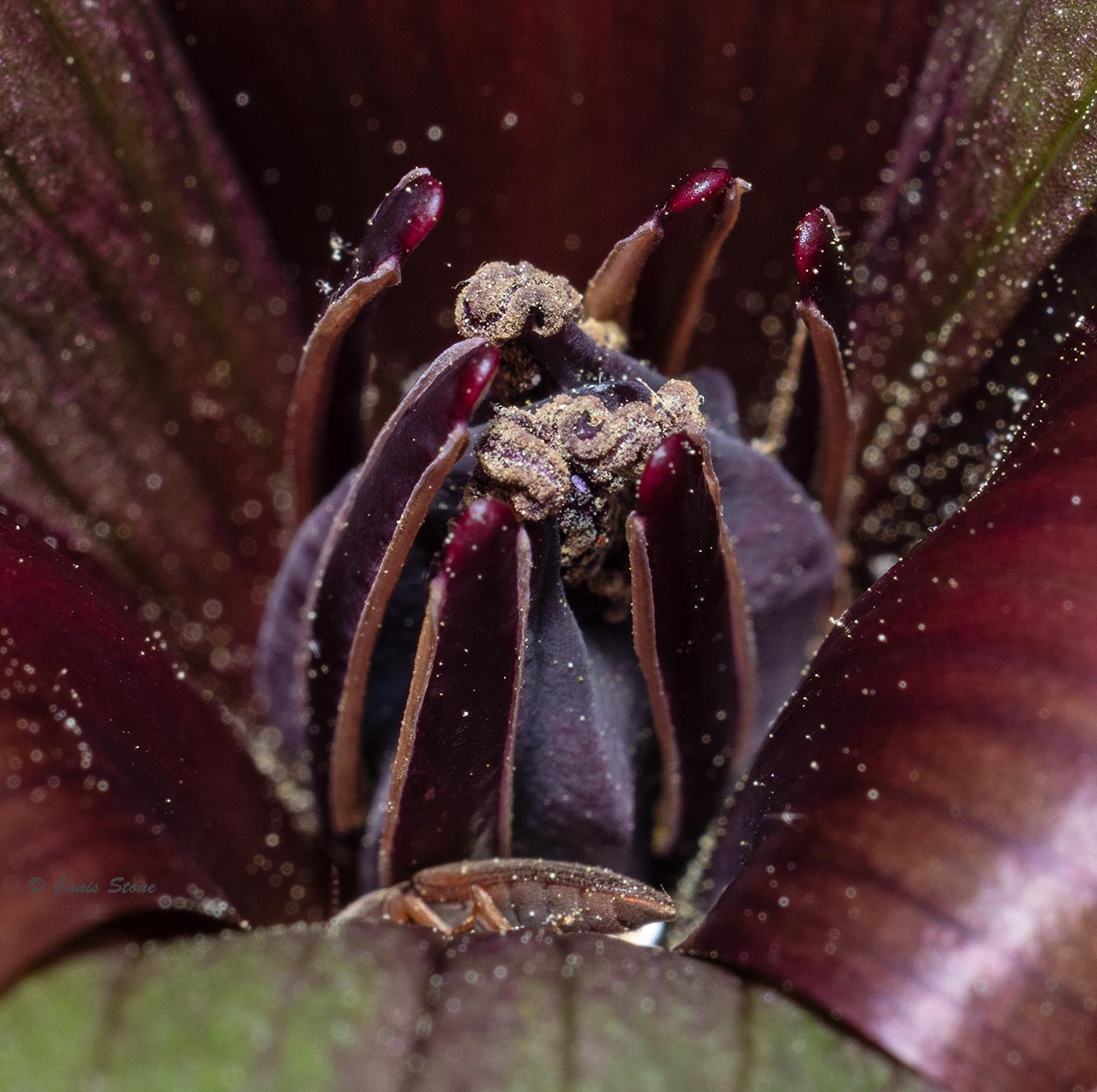
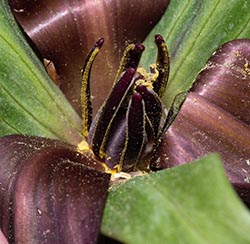
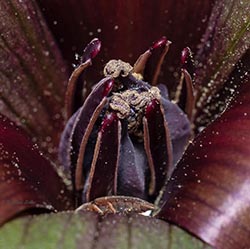
The pollen emerges from the sides of the anthers ('latrose anther dehiscense');
compare that to Sessile Trillium, in which the pollen emerges from insides of the anthers ('introse anther dehiscence'),
and what looks to be the connective part of the stamen ends in small burgundy bulbous tips.
The genus name trillium comes from the Greek for three;
the species epithet cuneate means wedge-shaped and refers to the shape of the petal.
13 April 2026
Great Falls National Park, Great Falls, VA
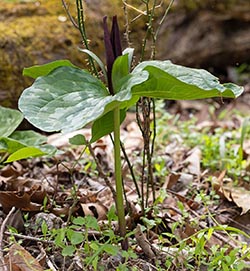
|
6 April 2026
Great Falls National Park, Great Falls, VA
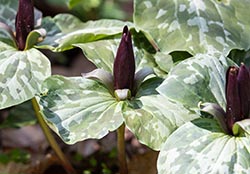
|
13 April 2026
Great Falls National Park, Great Falls, VA
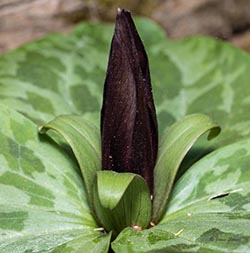
|
13 April 2026
Great Falls National Park, Great Falls, VA
(emerging blossom)
|
13 April 2026
Great Falls National Park, Great Falls, VA
(petals opened to show reproductive structures)
|
13 April 2026
Great Falls National Park, Great Falls, VA
('latrose anther dehiscense')
|
13 April 2026
Great Falls National Park, Great Falls, VA
('latrose anther dehiscense' and bulbous anther tips)
|
13 April 2026
Great Falls National Park, Great Falls, VA
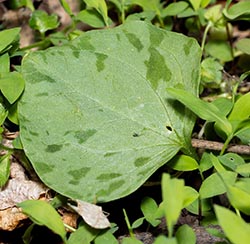
(first year growth)
|
13 April 2026
Great Falls National Park, Great Falls, VA
(young specimen with no bloom)
|
|
|
|
Return to list of flora